
Site-Specific Performance in Archaeological Sites: The Anamnesis Approach
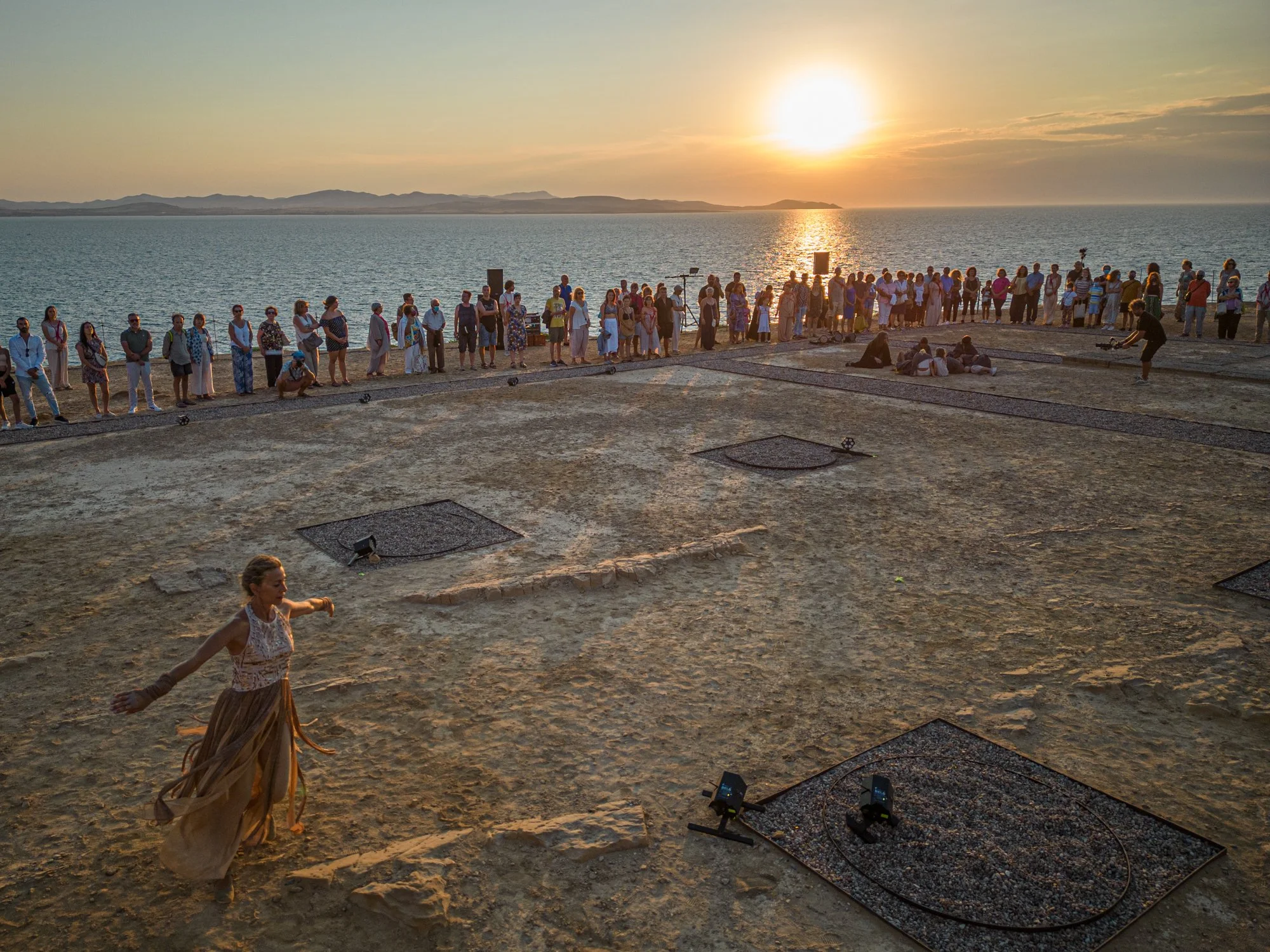
Anamnesis is a contemporary site-specific performance methodology created by Greek performance artist and choreographer Apostolia Papadamaki, integrating choreography, ritual, participatory practices, and cultural heritage activation within archaeological and historical landscapes.
As a performance artist working with Greek cultural heritage, Apostolia Papadamaki has developed Anamnesis as a form of participatory heritage performance that unfolds within ancient sanctuaries, archaeological sites, and culturally significant landscapes across Greece. Through contemporary ritual performance, Anamnesis explores how performance can reconnect audiences with mythology, embodied memory, landscape, and collective presence.
An Anamnesis site-specific performance in archaeological sites unfolds in direct relationship with a place, its landscape, its architecture, its history, and its field of memory. Each heritage performance emerges from within the site itself, and its form, movement, and dramaturgy take shape through encounter. Ancient pathways, fragments of structures, open horizons, and elemental forces become active components of the experience. The site reveals itself as a living presence, layered with traces of human passage, ritual, gathering, and collective life. Within this relationship, the performance becomes inseparable from its environment, and meaning arises through the connection between body and place.
Within the Anamnesis practice, archaeological sites are approached as generative fields of cultural memory. Stone, earth, water, and light participate in the unfolding, while thresholds, distances, and elevations shape the movement of the work. Choreography and direction develop through a continuous dialogue with the architecture, the terrain, and the rhythm of the environment. The work follows the logic of the place and grows through alignment with its presence, allowing the site itself to guide the unfolding of the experience.
At the center of this contemporary ritual performance stands the body. Performers engage with the site through contemporary performing techniques but also with meditation, voice, stillness, and attention, cultivating a presence that becomes a way of listening. The audience enters this field gradually opening their perception, walking, pausing, observing, and sensing as pathways open within the space. Each participant encounters the work from a unique position within the landscape, and the experience unfolds as immersive, relational, and continuously shifting.
The creation of each participatory heritage performance draws from multiple layers of knowledge. Historical research, mythological references, and the cultural context of the site inform the process, while embodied and intuitive forms of knowing emerge through direct engagement with the place. Memory operates as a living process, appearing through gesture, rhythm, and spatial awareness, moving between what is visible and what is sensed, and revealing itself through the interaction between body and environment.
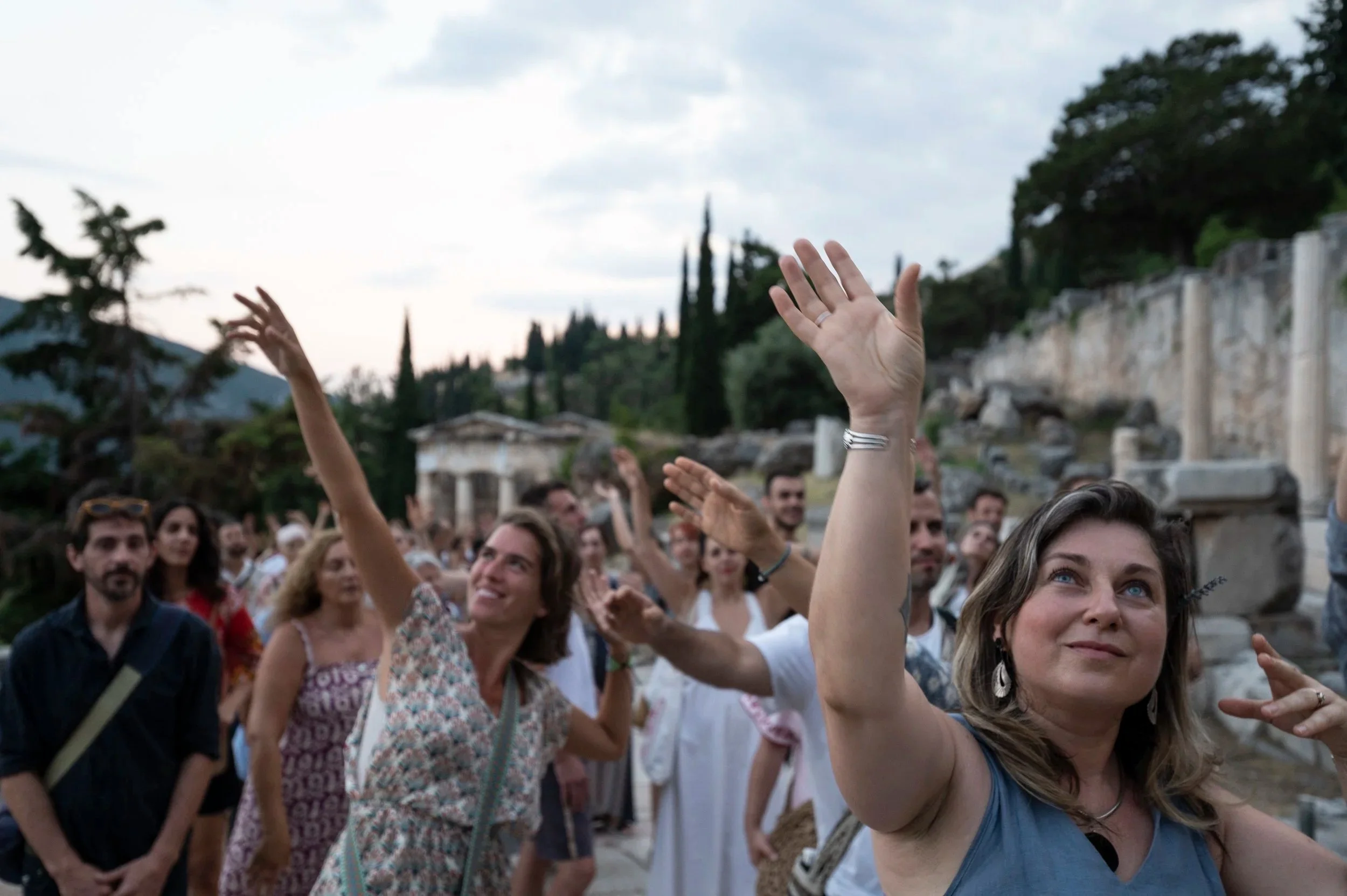
Within Anamnesis, site-specific performance in archaeological sites opens into a ceremonial dimension. The site is experienced as a living field of memory, and the body becomes a vessel through which this memory can be encountered. At the core of this practice lies orchesis, the integration of kinesis, melos, and logos, movement, sound, and voice, forming a unified language of expression. Through rhythm, repetition, and collective attention, the work generates a shared field of presence in which performers, participants, and place become interconnected.
This contemporary heritage performance methodology is rooted in the belief that archaeological sites are not passive monuments, but living spaces capable of generating collective experience in the present moment. Within this shared field, participants move through the site, encountering the work from shifting perspectives, as proximity, distance, and orientation reshape perception. Attention, emotion, and awareness circulate within the group, creating a collective experience in which each individual follows a unique pathway while remaining part of a larger whole.
Through this practice, archaeological sites become spaces of lived experience. The past enters into dialogue with the present through the body, and landscape, memory, and human presence interact in real time. Cultural heritage reveals itself as a living and evolving process, activated through participation and embodied awareness, and experienced as something that continues to unfold.
As a cultural heritage artist and Greek performance artist, Apostolia Papadamaki approaches site-specific performance in archaeological sites as both artistic creation and collective encounter. Through Anamnesis, contemporary performance art becomes a way of activating memory, reconnecting communities with cultural heritage, and creating immersive participatory experiences within landscapes of historical significance.
To enter an Anamnesis site-specific performance in an archaeological site is to step into a living field shaped by place, myth, and collective presence. Anamnesis offers this field as an invitation to experience, to connect, and to remember.
